Hey there, fellow curious minds! Have you ever found yourself gazing at something mundane, like a bubbling pot or a simple shadow, and suddenly felt that little spark of wonder about *how* it all works?
I know I have, and honestly, there’s nothing quite as satisfying as demystifying the world around us through a good old-fashioned science experiment. In today’s fast-paced, screen-heavy world, I’ve personally found that these hands-on explorations are an incredibly powerful way to not only ignite a passion for discovery in kids and adults alike, but also to build crucial problem-solving skills and foster a genuine appreciation for the science that underpins everything.
So, if you’re ready to roll up your sleeves and uncover the fascinating secrets hidden in plain sight, let’s dive right into some truly captivating basic science experiments that are guaranteed to spark your imagination!
Unlocking Everyday Mysteries with Kitchen Chemistry
There’s something truly incredible about realizing your kitchen isn’t just for cooking; it’s a bustling, unofficial laboratory brimming with scientific potential! I remember the first time I made a baking soda and vinegar volcano – the sheer joy and surprise when that foamy eruption happened was contagious, and it really sparked a lifelong curiosity in me. It’s not just about the fizz, though. These experiments are fantastic because they use ingredients you already have, making science accessible and super low-cost. Think about it: a little baking soda, some vinegar, maybe a few drops of food coloring, and you’ve got a dramatic chemical reaction unfolding right before your eyes. What I love most is how these simple reactions illustrate fundamental chemical principles like acid-base reactions and gas production in such a tangible way. It’s not just theory from a textbook; it’s a bubbling, fizzing reality that you can touch, see, and even smell (carefully, of course!). Plus, who doesn’t love an excuse to make a bit of a mess for the sake of learning? I’ve found that these kitchen experiments are often the best starting point because they strip away the intimidation factor and make science feel like play. You’re not just observing; you’re actively participating in the creation of a chemical spectacle, which, let me tell you, is far more engaging than simply reading about it. The “aha!” moments when kids (and adults!) grasp why something is happening are absolutely priceless.
The Fizzing Power of Acids and Bases
One of my all-time favorites has to be exploring acids and bases with household items. Lemon juice, vinegar, baking soda solution, even dish soap – they all behave differently, and it’s fascinating to see. I often use red cabbage juice as a natural pH indicator; it changes color dramatically depending on whether a substance is acidic or basic. Watching it turn vibrant pink for lemon juice or bright green for baking soda solution always gets a gasp. It’s like magic, but it’s pure chemistry! What I’ve personally observed is that presenting these concepts in a hands-on way makes them stick so much better than just hearing a definition. You’re not just learning what an acid or base is; you’re seeing its properties firsthand, experiencing the immediate feedback of the color change. This kind of experiential learning creates lasting memories and a deeper understanding that goes beyond rote memorization. Plus, it’s a great way to subtly introduce the concept of indicators and chemical reactions without ever needing fancy lab equipment.
Building a Homemade Lava Lamp
Who knew a classic lava lamp could be such a fantastic science lesson? All you need is a clear bottle, vegetable oil, water, food coloring, and an Alka-Seltzer tablet. Layer the oil and water, add some color, then drop in the tablet. The magic happens as the Alka-Seltzer reacts with the water, creating carbon dioxide gas. These gas bubbles attach to the colored water droplets, carrying them upwards through the oil. Once they reach the top, the gas escapes, and the heavier water sinks back down. It’s a brilliant demonstration of density, immiscible liquids, and chemical reactions all rolled into one mesmerizing display. I’ve done this countless times, and every single time, I find myself completely captivated by the slow, undulating blobs. It’s a wonderful way to introduce concepts that might seem complex on paper but become utterly clear when you see them in action. The visual appeal alone makes it an incredibly engaging experiment, proving that sometimes the simplest setups yield the most profound lessons.
Gravity-Defying Fun: Simple Physics You Can See
Physics often gets a bad rap for being difficult, but honestly, it’s everywhere, and some of its most fundamental principles are incredibly easy to demonstrate with just a few items you probably have lying around. I’ve always been fascinated by how things move and interact, and there’s a real thrill in understanding the unseen forces at play. Take gravity, for instance. We experience it every second, but truly understanding its effects beyond “things fall down” can be quite profound. From my own adventures in exploring physics, I’ve found that simple experiments can clarify complex ideas about motion, force, and energy in a way that truly clicks. It’s about taking that abstract concept and making it something you can manipulate and observe directly. You don’t need a high-tech lab to explore these concepts; sometimes, a simple ramp and a few marbles are all it takes to unveil the wonders of kinetic energy and momentum. It’s about seeing the “why” behind the “what,” and that’s incredibly empowering. These experiments are perfect for fostering critical thinking, as you can easily vary parameters – change the ramp’s angle, use different sized marbles – and observe how the outcomes change, leading to fantastic discussions and hypotheses. The best part? These are usually super quick to set up and even quicker to enjoy.
Balancing Acts: Finding the Center of Gravity
Have you ever tried to balance a fork on the rim of a glass? It sounds impossible, right? But with a little trickery involving a toothpick, you can achieve a truly impressive feat of balance. By attaching two forks to a toothpick and then carefully balancing the toothpick on the edge of a glass, you can shift the object’s center of gravity to a point directly below the pivot, creating a stable equilibrium. It’s a fantastic way to illustrate the concept of a center of gravity and stability without needing any complex equipment. I remember the first time I saw this; my mind was blown! It looked like pure magic, but knowing the physics behind it made it even more amazing. It’s a visual representation of a crucial physics principle, demonstrating how weight distribution impacts an object’s stability. I’ve done this for friends and family countless times, and the gasps of surprise are always rewarding. It’s one of those experiments that makes you feel like a wizard, even though you’re just applying basic physics.
The Power of Air Pressure: Crushing Cans
This one is a real showstopper, but it requires adult supervision due to heat! With an empty soda can, a small amount of water, and a heat source (like a stove burner), you can dramatically demonstrate the power of air pressure. Heat the water in the can until it boils and steam escapes, then quickly invert the can into a bowl of ice-cold water. The can will instantly crush inward! What happens is that the boiling water fills the can with steam, pushing out most of the air. When you plunge it into cold water, the steam rapidly condenses back into liquid, creating a vacuum inside the can. The much greater external atmospheric pressure then crushes the can. I’ve performed this experiment more times than I can count, and the sudden, dramatic implosion never fails to amaze. It’s a powerful visual that explains a concept that’s otherwise quite abstract – the invisible force of the air around us. Just be super careful with the hot can!
The Magic of Mixtures: Exploring States of Matter
The world around us is a constant dance of matter changing forms, combining, and separating. Understanding these changes, even at a basic level, is incredibly illuminating. I’ve always been fascinated by how simple ingredients can transform into something entirely new, or how they can exist side-by-side without truly mixing. This fascination often leads me back to the foundational concepts of states of matter and the properties of different mixtures. It’s not just about memorizing definitions; it’s about seeing the dynamic interplay firsthand. When you mix ingredients, are they truly combining, or are they just hanging out together? These are the kinds of questions that simple experiments can answer, turning abstract ideas into tangible observations. From my perspective, these investigations are excellent for developing keen observational skills, encouraging us to look closer at what’s happening and ask “why?”. It’s about moving beyond just seeing to truly understanding the processes unfolding before our eyes. Plus, many of these experiments have a wonderfully tactile element, which, in my experience, significantly boosts engagement and retention. You’re not just watching; you’re feeling the changes, which really cements the learning.
Non-Newtonian Fluid Fun: Oobleck
Have you ever played with Oobleck? If not, you’re missing out on one of the most wonderfully weird substances known to science! It’s a non-Newtonian fluid, meaning its viscosity changes under stress. Made simply from cornstarch and water, Oobleck behaves like a liquid when gently handled but becomes solid when you apply pressure, like punching it or rolling it into a ball. As soon as you release the pressure, it oozes back into a liquid state. I remember the first time I made Oobleck; I spent hours just playing with it, completely mesmerized by its bizarre properties. It’s a fantastic way to explore the concepts of viscosity, solids, and liquids in a truly unforgettable way. Kids absolutely adore it because it’s messy, hands-on, and utterly baffling. This experiment beautifully demonstrates that not all substances fit neatly into our conventional categories and opens up conversations about the complex nature of matter. It truly challenges our everyday assumptions about how materials behave and is always a hit for both its scientific lesson and its sheer fun factor.
Separating Mixtures: Colorful Chromatography
Ever wondered why that black marker isn’t just black, but a blend of many colors? You can uncover this secret with a simple paper chromatography experiment! All you need is a strip of coffee filter paper, a black (or other dark color) water-soluble marker, and a small amount of water. Draw a thick line with the marker near one end of the paper, then dip that end into a shallow dish of water, making sure the water level is below your marker line. As the water soaks up the paper by capillary action, it carries the different colored pigments at different rates, separating them into distinct bands. I’ve done this with various markers, and the results are always surprising and beautiful. It’s a wonderful visual demonstration of how mixtures can be separated based on the different properties of their components, specifically their varying affinities for the paper and the solvent. This experiment is not only visually appealing but also a fantastic introduction to a fundamental separation technique used in various scientific fields. It’s truly eye-opening to see the hidden colors emerge!
Nature’s Wonders: Bringing Outdoor Science Inside
Sometimes, the most profound scientific lessons are found right outside our door. The natural world is an endless source of fascination, from the intricate patterns of leaves to the incredible power of plants. I’ve always believed that connecting with nature is one of the best ways to foster a scientific mindset, encouraging observation, patience, and a deep respect for the environment. However, you don’t always need to be in a sprawling forest to explore these wonders; many amazing biological and ecological experiments can be set up right inside your home or classroom using elements from nature. What I truly appreciate about these types of experiments is how they bridge the gap between abstract biological concepts and the living, breathing world around us. They make things like photosynthesis, osmosis, and decomposition not just words in a textbook but observable, dynamic processes. I’ve found that these activities are particularly good for encouraging a sense of responsibility and stewardship towards our planet, as you’re directly interacting with and observing living systems. It’s a gentle reminder that science isn’t confined to labs but is an integral part of life itself.
Plant Power: Celery and Colored Water
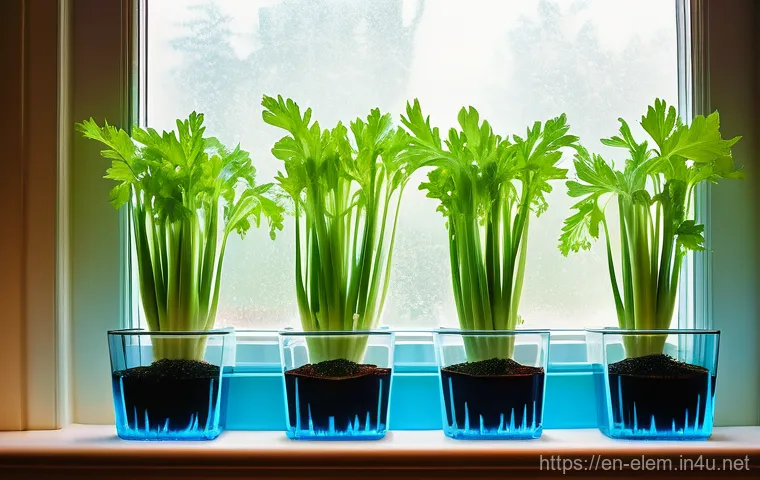
This classic experiment is a fantastic way to visualize how plants absorb water. Take a stalk of celery with leaves, cut off the very bottom, and place it in a glass of water that’s been colored with food coloring (blue or red works best!). Over the next few hours or days, you’ll see the colored water travel up the celery stalk and into the leaves, staining them the same color. This demonstrates capillary action and how plants transport water from their roots to their leaves through tiny tubes called xylem. I remember doing this as a kid and being absolutely fascinated by how the color slowly but surely spread throughout the plant. It’s a simple yet powerful illustration of plant physiology and the vital process of water transport, making an invisible process visible. It’s a great lesson in delayed gratification too, as you have to wait a bit to see the full effect, teaching patience alongside science.
Creating a Mini Ecosystem in a Jar
Building a terrarium in a jar is like creating your own tiny, self-sustaining world. With some soil, small plants (mosses, ferns), and a bit of water, you can seal it up and observe a miniature ecosystem at work. The water cycle, plant growth, and decomposition all happen within that sealed environment. I love watching how the condensation forms on the inside of the jar, illustrating how water evaporates and then precipitates, just like in the larger atmosphere. It’s a wonderful, hands-on way to understand ecological principles and the interconnectedness of living things. It teaches about closed systems and how even small changes can affect the balance within an ecosystem. I find it incredibly rewarding to watch these tiny worlds thrive, knowing that I’ve helped create a living science lesson. It’s also a beautiful piece of living decor!
Illusion or Reality? Experiments That Play with Perception
Our senses are amazing, but they can also be easily fooled! Exploring optical illusions and sensory tricks is not just incredibly fun; it’s also a fantastic way to delve into how our brains process information and how our perceptions can sometimes differ from reality. I’ve always been captivated by phenomena that make you question what you’re seeing or feeling, and these kinds of experiments provide a playful yet profound insight into psychology and neuroscience. From my own experiences, I’ve found that these “trick your brain” activities are particularly engaging because they create a sense of wonder and challenge our preconceived notions. It’s about understanding that what we perceive isn’t always a direct, unfiltered representation of the world, but rather an interpretation our brain constructs. This can lead to some really interesting conversations about subjectivity and the limits of our senses. It’s also a great way to introduce the idea that even our seemingly objective observations can be influenced, highlighting the importance of critical thinking and questioning assumptions. Plus, making someone gasp because their eyes are playing tricks on them? Priceless entertainment!
The Bent Pencil Illusion
This is a super simple one that always gets a reaction. Place a pencil or a straw in a glass of water and look at it from the side. It appears to bend or break where it enters the water! This isn’t magic, but rather an effect of light refraction. As light passes from one medium (air) to another (water), it changes speed and direction, causing the image of the pencil to appear shifted. I remember doing this as a child and genuinely believing the pencil was breaking; it was quite a mind-bending moment! It’s an easy, everyday example of a fundamental principle of optics, clearly demonstrating how light behaves when it passes through different materials. It’s a wonderful entry point into discussions about light, vision, and how our brains interpret visual information. This experiment vividly shows that what we see isn’t always exactly what’s there, making it a great conversation starter about perception.
The Spinning Dancer Illusion
While this one is usually done with a video or image, the principle is deeply rooted in perception. The spinning dancer illusion shows a silhouette of a dancer, and depending on how your brain interprets the visual cues, she can appear to be spinning either clockwise or counter-clockwise. There’s no definitive direction; your brain simply chooses one. What I find utterly fascinating about this is how it highlights the active role our brain plays in constructing our reality. It’s not just passively receiving information; it’s actively interpreting ambiguous visual data. I’ve personally spent way too much time trying to consciously switch the direction of the dancer, and it’s a brilliant exercise in understanding visual ambiguity and top-down processing in our perception. It’s a great way to illustrate that sometimes, two people can look at the exact same thing and genuinely see something different, all because of how their individual brains process the input.
Powering Up Creativity: Simple Circuits and Energy
Energy is the driving force behind everything, and understanding its different forms and how it can be harnessed is a cornerstone of scientific literacy. From the electricity that powers our homes to the kinetic energy of a moving car, it’s a concept that touches every aspect of our lives. I’ve always found a particular satisfaction in creating something that works, especially when it involves electricity, even in its simplest forms. There’s a distinct thrill in connecting a few wires and watching a light bulb glow or a small motor spin. These basic experiments with circuits and energy are fantastic because they move beyond abstract concepts and into practical application, showing how scientific principles can be used to build and create. My experience tells me that hands-on engagement with these topics demystifies electricity, turning it from a potentially intimidating force into something understandable and even fun. It’s about building a foundational understanding of how circuits work, what makes current flow, and how to safely interact with electrical components. These activities are brilliant for fostering problem-solving skills, as troubleshooting a non-working circuit quickly teaches you about the importance of connections and power sources. They also lay the groundwork for understanding more complex technologies that we rely on daily.
Lemon Battery: Harnessing Electrochemical Energy
Who knew a lemon could generate electricity? This classic experiment is a fantastic way to demonstrate electrochemical reactions. By inserting a galvanized nail (zinc) and a copper penny (copper) into a lemon and connecting them with wires, you create a simple battery. The acid in the lemon acts as an electrolyte, reacting with the metals to produce a small electrical current. You can even power a small LED light or a low-power digital clock if you connect a few lemon batteries in series! I remember the sheer surprise the first time I made a lemon light up an LED; it felt like a genuine feat of alchemy! It’s a brilliant, tangible way to show how chemical energy can be converted into electrical energy, making an abstract concept incredibly concrete. This experiment also subtly introduces the idea of voltage and current, and how different metals behave in an electrolyte. It’s a safe and exciting way to explore the basics of electricity and renewable energy.
Building a Simple Light-Up Circuit
Creating a basic circuit to light up an LED is a rite of passage for many budding scientists and engineers. All you need is a battery (like a 9V or AA), some insulated wires, and an LED (with a resistor if using a higher voltage battery to prevent burnout). By connecting these components correctly – positive terminal to the LED anode, cathode to the resistor, and then back to the negative terminal of the battery – you complete the circuit, and the LED illuminates. There’s a distinct satisfaction in seeing that light turn on, knowing you’ve made electricity flow. From my own tinkering, I’ve found that this experiment is invaluable for understanding the concept of a closed circuit, current flow, and polarity. It teaches the importance of every connection and how a single break can stop the entire system. It’s a foundational skill for anyone interested in electronics or simply understanding how everyday devices work. Plus, it’s a project with an immediate, satisfying visual result!
Beyond the Beaker: Making Science a Habit
Truly, the most valuable lesson I’ve taken from all my explorations into basic science is that science isn’t just confined to classrooms or fancy labs; it’s a way of looking at the world, a mindset of curiosity and inquiry that can enrich every single day. Making science a habit isn’t about memorizing facts; it’s about developing a keen sense of observation, asking “why?” and “how?”, and having the confidence to try to find the answers. I’ve personally found that the more I engage with these simple, hands-on experiments, the more my brain seems to naturally look for the scientific explanations behind everyday occurrences. It transforms the mundane into the marvelous. It’s about empowering yourself and those around you to be active participants in understanding the world, rather than just passive observers. These habits of mind are crucial, not just for scientific literacy, but for developing critical thinking and problem-solving skills that are applicable in every facet of life. It’s about cultivating a lifelong love for learning and discovery, and believing that you have the capacity to understand even the most complex phenomena, one simple experiment at a time. This isn’t just about doing an experiment; it’s about fostering a scientific spirit that lasts a lifetime. The joy isn’t just in the experiment itself, but in the ripple effect it has on how you perceive and interact with the world.
Developing a Scientist’s Eye: Observation is Key
One of the most powerful “skills” you can develop through science experiments is the art of observation. It’s not just about looking, but truly seeing – noticing subtle changes, patterns, and anomalies. I’ve always emphasized to anyone I’m doing experiments with that recording what you see, even in a simple notebook, is incredibly important. What changed? When did it change? How fast? These details might seem minor, but they’re the bedrock of scientific discovery. I personally keep a little journal for my home experiments, noting down my hypotheses, procedures, and, most importantly, my observations. This practice refines your ability to discern crucial information from background noise. It’s about training your brain to be more attentive and analytical. This habit of careful observation translates far beyond the experiment itself, making you more aware and perceptive in all areas of life, from noticing a new plant in your neighborhood to understanding a complex problem at work.
Embracing Failure as a Learning Tool
Let’s be real: not every experiment works perfectly the first time. And that’s absolutely okay! In fact, some of my biggest learning moments have come from experiments that went “wrong.” What I’ve learned firsthand is that failure in science isn’t an endpoint; it’s a detour, an opportunity to re-evaluate, hypothesize again, and try a different approach. It teaches resilience and adaptability. I vividly recall an attempt to make homemade slime that turned into a sticky, unmanageable mess. Instead of getting frustrated, I tried to figure out why. Was it the ratios? The ingredients? This process of troubleshooting is, in itself, a crucial scientific skill. It encourages a growth mindset, showing that challenges are just problems waiting to be solved. Embracing these moments of “failure” is essential for building genuine scientific confidence and understanding that the path to discovery often involves a few missteps along the way. It reinforces that learning is a continuous process of trial and error.
| Experiment Type | Key Scientific Concepts | Common Household Materials | Safety Notes |
|---|---|---|---|
| Kitchen Chemistry | Acid-Base Reactions, Gas Production, Density | Baking soda, vinegar, oil, water, food coloring, Alka-Seltzer | Supervise heat sources, avoid ingestion of non-food items |
| Physics in Action | Gravity, Air Pressure, Center of Gravity, Refraction | Pencils, glasses, water, soda cans, ice, heat source | Adult supervision for heat/pressure experiments |
| States of Matter | Viscosity, Mixtures, Chromatography, Capillary Action | Cornstarch, water, coffee filters, markers, celery | Keep away from eyes, avoid ingestion |
| Nature’s Biology | Water Transport, Ecosystems, Condensation, Photosynthesis | Celery, colored water, soil, small plants, clear jars | Ensure proper ventilation for closed jars, handle plants gently |
| Perception & Illusions | Light Refraction, Visual Interpretation, Sensory Perception | Pencils, glasses, water, online illusion images/videos | No specific safety notes, mostly observation-based |
| Circuits & Energy | Electrochemical Reactions, Closed Circuits, Current Flow, Polarity | Lemons, galvanized nails, copper pennies, wires, batteries, LEDs | Avoid short circuits, do not connect directly to wall outlets |
글을마치며
Well, fellow curious minds, we’ve explored some truly captivating basic science experiments today, and I genuinely hope this journey has sparked a deeper appreciation for the wonders hidden in plain sight. From the fizzing power of kitchen chemistry to the mysteries of perception, science is truly an accessible and exhilarating adventure. My biggest takeaway, and what I hope you carry with you, is that the world is your laboratory, and every question is an invitation to discover something new. Embrace that curiosity, and keep experimenting!
알아두면 쓸모 있는 정보
1. Start Simple and Safe: You absolutely don’t need fancy equipment to do amazing science. My personal rule of thumb is to begin with everyday household items and always prioritize safety. Ensure adult supervision for any experiments involving heat, sharp objects, or potentially irritating chemicals. A pair of safety goggles from your local hardware store is a small investment for huge peace of mind, especially when little ones are involved. It’s about building confidence safely.
2. Embrace the Mess (Within Reason!): Let’s be real, some of the best science is a little messy, and that’s perfectly fine! I’ve learned that allowing for a bit of controlled chaos often leads to deeper engagement and memorable experiences. Just make sure to lay down some old newspapers or a plastic tablecloth, and have cleaning supplies ready. It truly takes the pressure off and lets everyone focus on the discovery, not just the spotless outcome. My own kitchen has seen its fair share of “scientific fallout,” and those are often the stories I tell most fondly.
3. Document Your Discoveries: Trust me on this one – keeping a simple science journal, even if it’s just a notebook, can dramatically enhance the learning. Jot down your hypotheses, what you did, what you observed, and what you think happened. I’ve found that writing things down solidifies the concepts in your mind and helps you notice patterns or unexpected results you might otherwise miss. It’s a fantastic habit that hones your observational skills and helps you track your journey of understanding.
4. Failure is Just a Detour: Not every experiment will go exactly as planned, and that’s not just okay, it’s fantastic for learning! I’ve personally had countless “failed” experiments that taught me far more than the ones that worked perfectly the first time. Use those moments to ask “why?” What went wrong? How can you change it? This iterative process of problem-solving and critical thinking is at the very heart of scientific inquiry. It teaches resilience and reminds us that learning is a continuous process of trial and error.
5. Connect to the Real World: Always try to link your experiments back to real-world phenomena. When you make a baking soda volcano, talk about real volcanoes or antacid tablets. When you explore air pressure, discuss how suction cups work or why airplanes fly. I’ve found that these connections make the science feel incredibly relevant and show how these fundamental principles shape our daily lives and the world around us. It deepens understanding and sparks even more questions, turning every day into a learning opportunity.
중요 사항 정리
In wrapping up our journey through accessible science, remember these key takeaways that I hold dear from my own experiences: Science is not a distant, intimidating subject but an exciting, hands-on exploration available to everyone, using everyday items. It’s a powerful tool for developing critical thinking, keen observation skills, and a problem-solving mindset that extends far beyond the lab. The true magic lies in the process of asking questions, observing carefully, and learning from every outcome, whether expected or surprising. By embracing a curious and experimental spirit, you empower yourself and those around you to understand the world on a deeper, more engaging level. Keep that spark of wonder alive, and never stop exploring!
Frequently Asked Questions (FAQ) 📖
Q: I love the idea of exploring science at home, but honestly, I’m not a science whiz, and I’m worried about getting started. Do these “basic” experiments require a ton of specialized equipment or a degree in rocket science?
A: Oh, trust me, I completely get that feeling! For the longest time, I thought “science experiment” meant a lab coat, goggles, and beakers I definitely didn’t own.
But that’s the beauty of basic science – it’s all about looking at the everyday world with fresh eyes! You absolutely do not need fancy equipment or a PhD to dive in.
Most of the truly captivating experiments I’ve stumbled upon, and even some that have completely blown my mind, use things you probably already have lying around your kitchen or garage.
Think baking soda, vinegar, dish soap, water, food coloring, coins, even a few leaves from your backyard! The magic really isn’t in the tools, but in the observation and the “aha!” moments.
My personal journey started with a simple experiment involving a balloon and static electricity, and it sparked a curiosity that’s still burning bright today.
It’s truly astonishing what you can discover with just a few household items and a willingness to ask “why?” and “what if?”.
Q: In today’s super-connected, screen-heavy world, how can a simple science experiment truly grab my child’s attention and help them learn, especially when they’re used to such high-stimulation digital content?
A: This is such a real and valid concern, isn’t it? It feels like we’re constantly battling for our kids’ attention against a tidal wave of flashy apps and endless videos.
But here’s what I’ve consistently observed, both with my own family and friends’ kids: there’s something fundamentally different, something deeply primal and satisfying, about hands-on discovery.
A screen can show you a volcano erupting, but it can’t replicate the fizzing, bubbling, and slightly vinegary smell of a baking soda volcano you just built yourself.
That tactile, multi-sensory engagement creates a much deeper, more memorable learning experience. When a child causes something to happen, when they see a color change they initiated, or watch gravity at work with their own eyes, it’s not just a passive consumption of information.
It’s active participation, problem-solving, and often, pure unadulterated joy. I’ve seen kids who usually have their noses glued to tablets completely light up when they successfully make an egg float or bend light with a glass of water.
It’s about empowering them to be the scientists, the engineers, the discoverers in their own world, and that’s an experience no screen can truly replace.
Q: You mentioned that these experiments help build crucial problem-solving skills. Can you elaborate a bit more on what kind of practical skills we can actually develop? Is it more than just fun, or does it translate to real-world benefits?
A: Absolutely! This is where the true long-term value of these experiments shines through, beyond the initial “wow” factor. It’s so much more than just a fun afternoon activity – it’s a foundational bootcamp for critical thinking.
When you’re trying to make a lemon battery work, you’re not just following instructions; you’re often troubleshooting. Why isn’t the light coming on? Is the wire connected properly?
Is the lemon acidic enough? This process of identifying a problem, hypothesizing solutions, testing them, and then analyzing the results is the very essence of scientific inquiry, and it’s a skill that’s invaluable in every facet of life.
From fixing a leaky faucet to debugging a computer program, or even just figuring out the best route to avoid traffic, that systematic, experimental mindset comes into play.
I’ve personally found that the confidence gained from successfully completing an experiment, even a simple one, spills over into other areas. It teaches patience, resilience when things don’t go as planned, and the satisfaction of independent discovery.
It’s truly about fostering an inquisitive mind that isn’t afraid to tackle challenges and learn from every experience.